
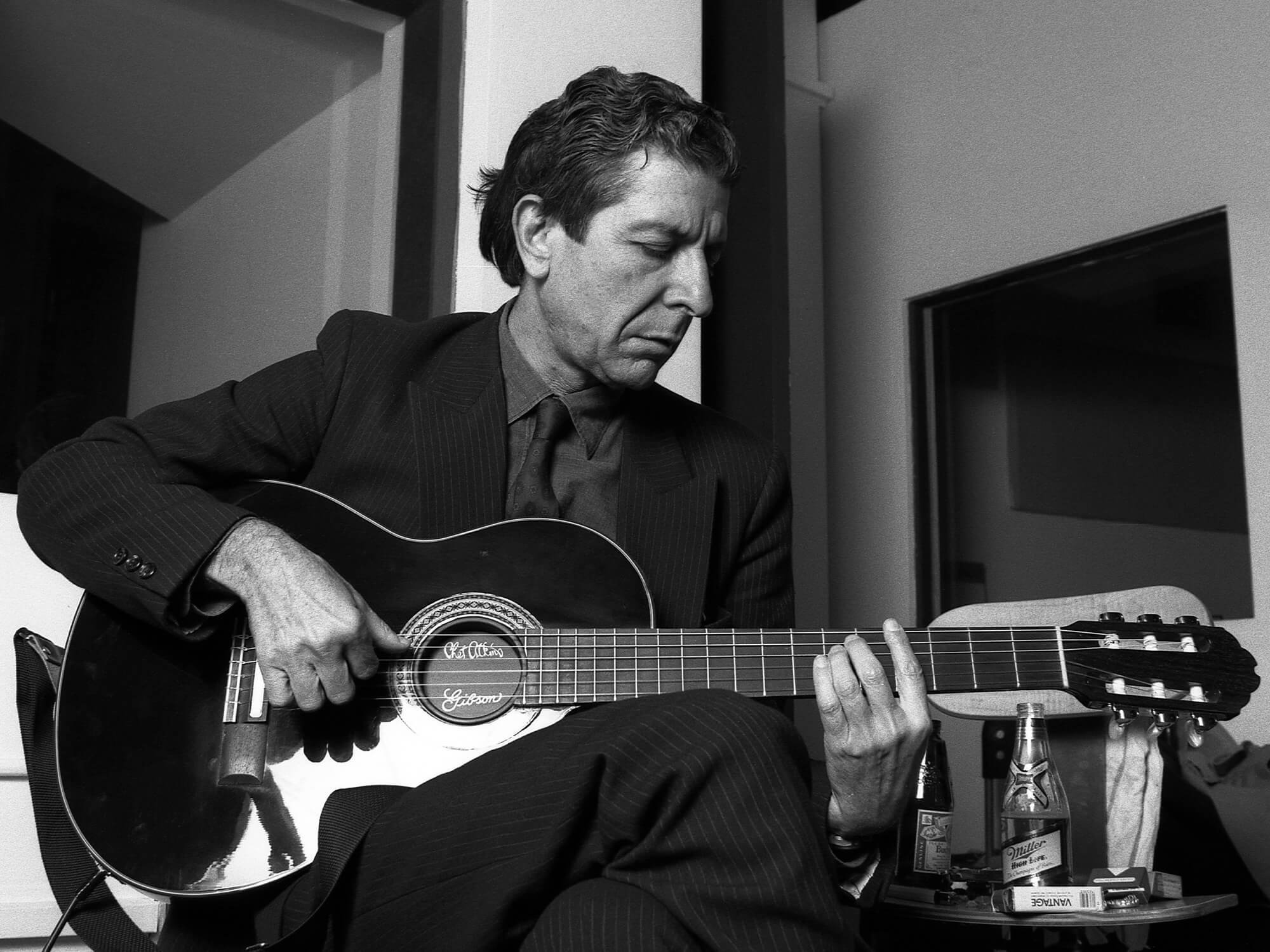
Leonard Cohen Albums
Born in 1934, Leonard Cohen was 33 when his first album came out in 1967. He hadn’t really planned on being a musician, was more of a poet who had many books of poetry behind him. This gave him a very unique musical perspective, something of the more shy variety and his influences were hardly recognized. So put it another way, he was someone who did not come into this doing Pop music, but he had his own take on what a song should sound like. The atmosphere was first and for most, even though many people say his lyrics are what shine – and they are- I mean, both things are true. He was also not too prolific, only have an album every couple of years, which always helps when looking at an entire discography and keeps things more consistent. In all, Cohen was a gifted singer songwriter than gave the world some indescribable songs over the years- among them “Hallelujah” from 1984 which is one of the most covered songs of all time.
Best Album:
Songs of Leonard Cohen
Biggest Influences:
Bob Dylan, Hank Williams, Walt Whitman, WB Yeats, Carol King, Janis Joplin, The Platters, The Righteous Brothers, Joan Baez, Allen Ginsberg, Federico Garcia Lorca Jack Kerouac
Albums Chronologically
1967 - 99% - Songs of Leonard Cohen
1969 - 84% - Songs from a Room
1971 - 88% - Songs of Love and Hate
1974 - 74% - New Skin for the Old Ceremony
1977 - 76% - Death of a Ladies Man
1979 - 56% - Recent Songs
1984 - 78% - Various Positions
1988 - 91% - I’m Your Man
1992 - 80% - The Future
2016 – 83% - You Want It Darker
1967
Songs of Leonard Cohen - 99%
It is hard to put into words an album that is so good, it defies explanation. Basically, Leonard Cohen’s debut album, Songs of Leonard Cohen, is the most poetic album ever made. He combined the poetic and rambling style popularized by Bob Dylan with the elegance and shyness of Paul Simon, but he was about ten years older than both of those artists on his debut album (at 34 years young). Nearly every folk-oriented song has some kind of beautiful statement: "He was just some Joseph looking for a manger," "If your life is a leaf that the seasons tear off and condemn," "I forget to pray for the angels, then the angels forget to pray for us." The first five songs form a string of words that could be interpreted in many ways, and there is not a dull moment among them: “Suzanne” is the most covered song and an instant classic; the menacing tale of “Master Song”; “Winter Lady”, which is the closest that a song has ever come to matching the aura of its title; “Stranger Song” which seems like it could go on forever; the sweet "Sisters of Mercy" which sounds like it came from a thousand years ago. Cohen’s tunes are truly timeless where most artists of his era are quickly dated.
Beginning the second half of the record is "So Long Marianne", is the most conventional "rock" song on here, but it is still my favorite with its crescendoing choruses that are joined in by female singers, which shuns the timeless quality of the first half of the record but still has aged very well. “You held on to me like I was a crucifix” has got to be one of the greatest lines ever written. Where it is often said that Cohen is better with words than music, I don’t think that is a fair assessment even though sometimes on his debut the lyrics do overshadow the music (perhaps on "Stories of the Street").But every song on here is elegantly crafted and musical as well: the aforementioned "So Long, Marianne", the Gordon Lightfoot influenced "Teachers”, the elegance crafted in "Hey That’s No Way to Say Goodbye". The album closes with "One of Us Cannot be Wrong" which contains an air of finality that sums up the album’s style and tells a tale of grotesque beauty that foreshadows how his later career would often focus on more dire themes and be more open and brutal in its honesty. It is an album that ends in an anguished cry of despair instead of the formal perfection of the first half.
Cohen whispers his songs to the listener in a mysterious atmosphere haunts every song on here, a style which Cohen created himself and often goes overlooked. The soft air of mystery is undoubtedly part of the "music", which can actually drown out the lyrics at times. So whatever anyone can try and negatively say about this album - it is too depressing, all the songs sound the same - there is no denying it is a masterpiece that holds up to this very day. It is not just an album for a snowed in day, it is great to dance to, drive to, and blast out of the speakers at a party. Songs of Leonard Cohen’s consistency and truthfulness will undoubtedly last forever, like all of his music.
Greatest Songs: So Long Marianne, The Stranger Song, Hey That’s No Way to Say Goodbye, Suzanne
1969
Songs from a Room - 84%
The second album is definitely more of the same, but that is a great thing. The gentle "Bird on a Wire", the more thoughtful and knowing French language verses of "The Partisan", and the prophetic and ghastly "The Story of Issac" match anything from the first record. "Tonight Will Be Fine" is a hell of an album closer, saving the best for last, and there have been many versions of this song over the years that have brought out different aspects of this one (notably Teddy Thompson’s). There are some times where you can see repetition like on the "So Long, Marianne" homage "A Bunch of Lonesome Heroes", "Seems so Long Ago, Nancy" (if one year is a long time) and the awkward second side opener “Old Revolution”, both of which sort of fail at their jobs. However, on the dreary and longing of a woman’s touch on "You Know Who I Am", Cohen does a really good job of balancing everything out with well-thought-out ideas.
Songs from a Room is more subtle than the debut and requires more listens to assimilate. The lyrics, as usual, are always a joy to behold as Cohen remains one of the best poets alive. What is great about this record, which is a record people hate to love if you know what I mean, is that you can revisit it and always find something new. Take the song "Lady Midnight" – Cohen talks about loving a woman like he always has regrets, quite different than what is heard on the radio. “The Butcher” is more disturbing of anything he had done before, describing in detail and the rationale of a lifestyle of a job leading to drug abuse. "I found a silver needle, I put it into my arm. It did some good, and it did some harm." Sometimes singer/songwriters are just like that - they lay the groundwork, other bands come in and bring out what they are trying to (often quietly) say.
Greatest Songs: Tonight Will Be Fine, Bird On A Wire, The Partisan, Lady Midnight
1971
Songs of Love and Hate - 88%
The third great Cohen record in a row, Songs of Love and Hate shows more growth in songwriting than the second album did. The songs are longer, the lyrics are more cynical, the sound is more overall apocalyptic. Cohen’s voice is actually hoarse quite a bit on the record, adding a rough and horrifying sound to many of the songs. Sounds like fun right? Well, songs like "Diamonds in the Mine" show a new fun side of Cohen, though the humor is blacker than black. Lyric Sample: “there is no comfort in the covens of the witch/ Some very clever doctor went and sterilized the bitch!” Even better, the three classic songs here are among his best ever: "Dress Rehearsal Rag" is an acoustic track full of color that defines Bob Dylan at his best that could go on forever; "Famous Blue Raincoat" gives ‘haunting’ a new meaning with a tremendously foreboding female accompaniment; "Avalanche" opens the album with a trembling guitar, terrorizing the listener with lines like, "It is your turn beloved, it is your flesh that I wear."
There merging of this harsher side of Cohen combines with his newfound confidence in his singing voice, never so versatile before. He is moving form shy and introverted to confessional and challenging in the best way. Somehow, it is all very accessible which is an amazing feat in its own. Only a genius like Cohen could wed poetry so dark to music so good to create something so meaningful. The man does not seem stuck in a rut at all on his third album, and in many ways this is as good as his debut - other highlights are the "la-de-da" ending of "Sing Another Song Boys" and the timeless lyrics of "Joan of Arc" and “Last year’s Man” which both admittedly may have better words than music. Only in “Love You By Your Name” does any of it come off as less than memorable.
Greatest Songs: Famous Blue Raincoat, Diamonds in the Mine, Avalanche,Dress Rehearsal Rag
1974
New Skin for the Old Ceremony - 72%
This album has much to offer, though it is his least consistent so far. It is also his most laid back and carefree, not a term I would have associated with Cohen prior to this. "Chelsea Hotel no. 2" is one of his best songs, a beautiful ballad going out to a long-lost love (Janis Joplin, it is believed). Other highlights include the dark and dreary "Who By Fire" which is the kind of campfire sing along used to conjure up spirits, the rousing "and effectively reparative chorus of “Lover Lover Lover", and the sarcastic ballad "A Singer Must Die".
Again, the lyrics are the reason to tune in quite often, especially in "There is a War" and "Take this Longing" which are endlessly poetic. For the first time though, about half the album is kind of tame, beginning with the weak opener "Is This What you Wanted" and spreading to all those other songs I didn't mention. There is still plenty of good here, but I would advice novices to get the first three records and then if they want more, continue here because some of this is still essential Cohen.
Greatest Songs: Chelsea Hotel no. 2, Who By Fire, A Singer Must Die
1977
Death of a Ladies Man - 76%
This album was a huge gamble for Cohen: combining the legendary Phil Spector's "wall of sound" production with Cohen's unique folk flavor. The results are hated throughout the land by most people (including Cohen in some interviews) but I freakin’ love it! Well, most of it. The first half is all good and sometimes great, the production provides a great contrast I think and no one ever points this out, but this is Cohen's first real Rock n' Roll record. "True Love Leaves No Traces" is the perfect opener and one of his best, right up there with "Suzanne"; "Memories" is the best song, taking Cohen to Broadway while lusting after big, busty blondes; "Paper Thin Hotel" is the typical lost lovelorn ballad except with more walls...of sound; "Death of a Ladies Man" is Cohen's longest song at nine and a half minutes and it earns every minute of it - it's perhaps his stab at Dylan's "Sad Eyed Lady of the Lowlands".
There are some clunkers that are actually pretty humorous if you’re in the mood: "Don't Go Home with Your Hard On" is his stab at disco (featuring the immortal line "Don't go home with your hard-on, it will only drive you insane!") and "Fingerprints" and "I Left A Woman Waiting" have elements of 70's country. Actually, Death of a Ladies Man is one of Cohen's most important albums because it marks the TURNING POINT where he started sounding...fun. That's right, the king of doom-laden lyrics has a lighthearted side that really began to shine of this record though it had flashes before in his work ("Diamonds in the Mine", "One of Us Cannot Be Wrong"). Also, he was more direct in his lyrics (more naked women and open politics). Fans of Cohen should at least give this one a listen - you just might fall in love with a side you didn't know he had.
Greatest Songs: Memories, Death of a Ladies Man, True Love Leaves No Traces
1979
Recent Songs - 56%
The "return to form" after the commercial failure of the last record is the actual failure musically. There are a couple of great songs in the multi-chorused "The Guests" and the usual Cohen charm in "Our Lady of Solitude". I would say that "The Traitor" tells a great story but the music is relatively boring, "Humbled in Love" shows how his voice has dropped significantly, and "The Smoky Life" portrays just that. Everything else is very so-so, like New Skin for the Old Ceremony without the good songs. It sounds kind of like an album he wrote hastily to compensate for the previous record’s experiment, but in reality he shouldn't have bothered. Every song just sort of trudges by slowly and it is his worst album by far.
Greatest Songs: The Guests, Our Lady of Solitude
1984
Various Positions - 78%
After a much needed five year wait, Cohen returns revitalized with Various Positions, his seventh studio record. Vocalist Jennifer Warnes was hired to record the album with and the addition of a strong female presence really helps Cohen’s songs shine. The first six songs show his new self, which is pretty much like his old self, except there is more of a gospel tone surrounding the songs. "Night Comes On" could have been a b-side to Songs of LC; "Coming Back to You" is a lovely gospel ballad; "The Law" is one of Cohen's best songs to date, a tale of drug decay and corruption that manages to disturb; "The Captain" is upbeat music to downbeat lyrics, sample: "Whatever makes a soldier sad will make a killer smile."
Of course, the main force and centerpiece of the record is the now classic "Hallelujah", covered by every folksinger and band that is hip and cool from 1990’s after. Truly, this is one of the most covered songs imaginable, other famous versions including Jeff Buckley, Rufus Wainwright, Damien Rice, and a zillion others. It deserves all of this praise though, being a gospel tinged melody that is less about being Christian than about religion itself, and the way Cohen interprets it all through his magical lyrics is a sound that has to be heard. Because of the shabby quality of the last three songs (a third of the record) this album is not a classic but it is his best overall album maybe since Songs of Love and Hate. It is definitely worth getting for the above mentioned tracks.
Greatest Songs: Hallelujah, The Law, Coming Back to You
1988
I'm Your Man - 91%
Though Various Positions was a comeback of sorts, I'm Your Man is a masterpiece, bettered only by in Cohen's discography by his debut. The sound is insanely futuristic with drum machines meeting women gospel choirs in strange ways. It is also a return to the humor of Death of a Ladies Man and quite welcome after the "heavy" tone of the last couple of records, best evidenced by the hilarious chorus of "First We Take Manhattan" (which has to be some kind of joke) and the clever lyrics of the satanic crooning of "Everybody Knows" and the sleezy and powerful title track "I'm Your Man".
My personal favorites are the more emotional songs- "Ain't No Cure for Love" is one of his greatest ballad’s ever of course taking on the concept of love itself, "Take This Waltz" which uses a ¾ time signature to break your heart; the flowing majesty of Cohen’s best song of the 1980’s (yes even over “Hallelujah”) "I Can't Forget"; the lyrically perfect poetry and declaration is closer "Tower of Song.” All of these rank among his best songs. With the exception of minor quibbles ("Jazz Police" is awful and the first track “first We Take Manhattan” is pretty cheesy with the background singers) everything rules on this album, which is a new career high for Cohen. It is his most lighthearted album, despite being very blunt about romance and politics at times. Cohen has moved from being an introvert alone with "songs in a room" to the prophet of the future about how to love a woman right. Like all great rock n roll songwriters he has evolved beautifully and I'm Your Man is a must have for any fan of music.
Greatest Songs: I Can’t Forget, Tower of Song, Ain’t No Cure for Love, Take this Waltz
1992
The Future - 80%
Even dark and more morse than ever, The Future tackles the 1990’s like no other Singer-songwriter album before or since. The first five songs might be among Cohens best music ever, and I mean that. Opener "The Future" is my case in point: "You don't know me from the wind, you never will, you never did. I'm the little Jew who wrote The Bible." That is just a sample from one of the best Cohen songs, a futuristic (heh) journey of gospel music from our favorite prophet fit with a backing female soul choir. Seriously, the title track “The Future” is so good is threatens to overshadow the rest of the record! But it doesn't because the rest is really good also: "The Anthem" contain some of his best lyrics: "Ring the bells, that still can ring. Forget your perfect offering. There is a crack in everything, that's how the light gets in."; "Be for Real" and "Closing Time" are his best stabs at R&B in his career, the latter throws country in the mix; "Waiting for the Miracle" is a steady march that goes on for about seven and a half minutes but never gets old- this song earns its length and finds power in it.
"Democracy" is good, but not quite as great as the first five songs because it is a little too long. In fact, length is the main weakness of this record- the average song length is six and a half minutes, and at nine songs it is way too long (an hour in all, still no song passes "Death of a Ladies Man" in length). The Future is a really good album, though it has the same problem that Various Positions had with a weak closing trilogy of songs. The last three songs are different in a bad way: "Always" tries to be Sinatra ballad (eight minutes); "Tacoma Trailer" is his first instrumental...an electronic instrumental at that; while "Light as the Breeze" is just plain boring. I would still call this a minor masterwork, ranking about the same as Songs from a Room but better than Various Positions overall, because two-thirds of this album is so good. It is Cohen's last really solid work and his most direct album, his ultimate testament on the state of the world: harsh, grim, and hopeless- get ready for the holy judgement.
Greatest Songs: The Future, Anthem, Waiting for a Miracle
2016
You Want It Darker – 83%
It is true that Cohen passed away about a month after the release of his final album, and similar to David Bowie who also passed away with a final album statement, Cohen knew the end was near and approaches it with some grace. “Treaty” is a solemn ballad among many of them on here and one of the more effective of his career. Title track “You Want It Darker” feels a bit like all human life is ending, as its hard to imagine an epitaph more bleak than this- “I’m ready, Lord” he proclaims, basically already on the deathbed. “Leaving the Table” sounds like an instant classic, as he sings he also cries. Minimal arrangements are abounding this time around, some piano here and some sprinkle of guitar here, but most of these songs almost come off as a cappella. “If I Didn’t Have Love” and “On the Level” come to mind, sparse and full of regret.
Whatever made Cohen focus up musically, something has him take his simple approach and make amazing songs again after several albums were he had collaborators and made his music a bit too common sounding (Ten New Songs (2001), Dear Heather (2004), and Old Songs (2012)). This album is a nice endcap to his career and it’s a nice length at 36 minutes, much more concise than his last great work The Future (1992). “Traveling Light” sounds like the last love song of the world, with his favorite female backing accompaniment behind him. “Steer your Way” his final album closer (even with an instrumental “Treaty reprise at the end) with a memorable violin evoking Lisa Germano, and a brilliant way to spice up the end of the album; a twisted take on Christ himself and humanity at large- “As he died to make men holy/ let us die to make things cheap.” A lyrical legend.
Greatest Songs: Steer Your Way, You Want It Darker, Leaving the Table